
PerformanceRead post →
Why Your Website Speed Could Be Driving Customers Away
R
Rahul · Jan 17, 2026 · 5 min read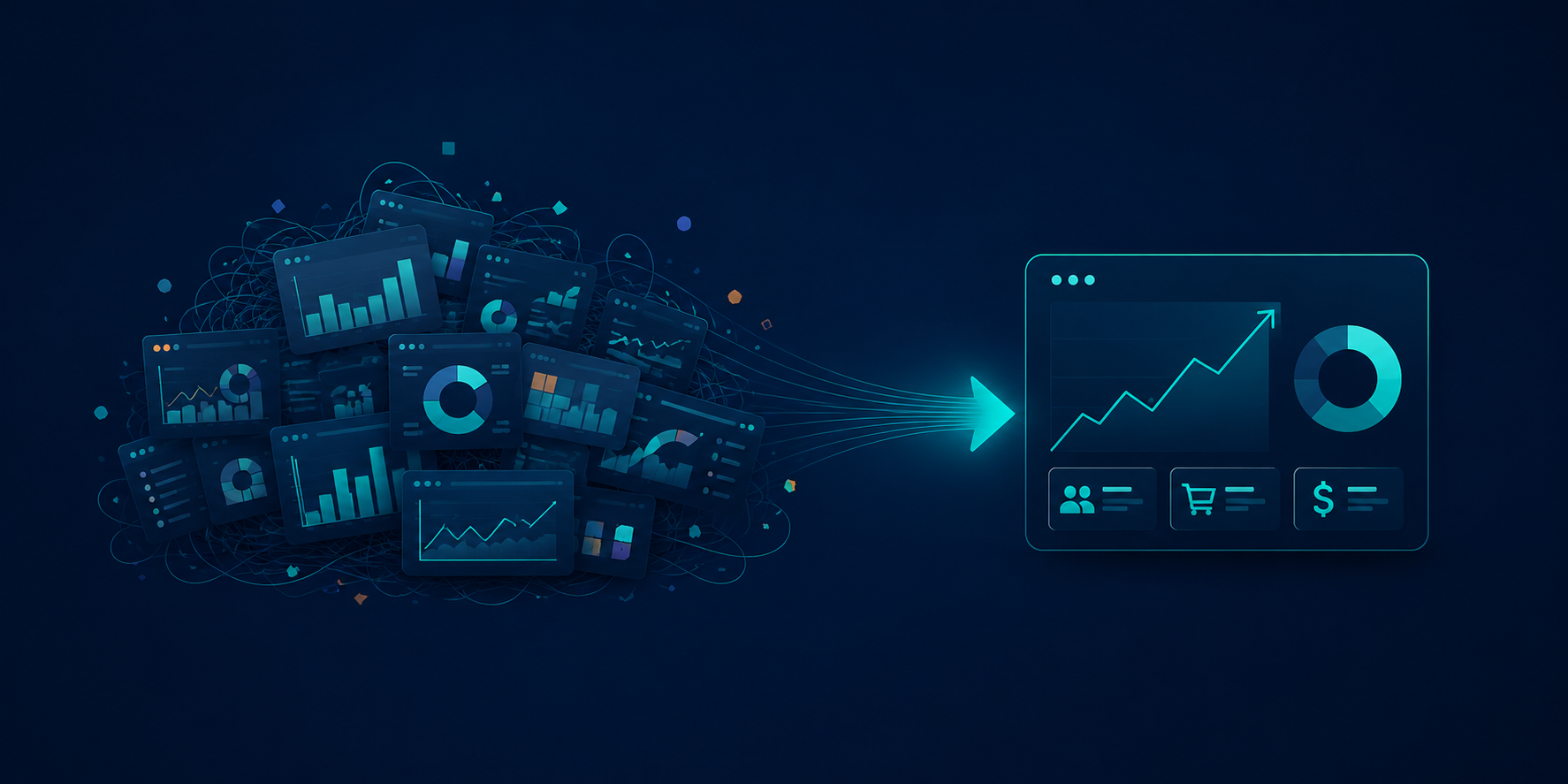
A decade ago, most companies were running their websites with Google Analytics and maybe a CRM. Today, the average marketing team has access to dozens of platforms collecting data from every possible touchpoint.
Google Analytics 4. Amplitude. Mixpanel. Hotjar. Microsoft Clarity. HubSpot. Salesforce. LinkedIn Campaign Manager. Meta Ads Manager. Google Search Console. Ahrefs. SEMrush. VWO. Heap. FullStory.
Every platform promises deeper insights.
Every platform promises better decisions.
Every platform promises growth.
Yet many businesses continue to struggle with the same questions:
The uncomfortable truth is that most companies don't have a data problem.
They have an attention problem.
Modern analytics platforms have become feature-rich ecosystems.
Dashboards. Funnels. Heatmaps. Session recordings. Cohort analysis. Attribution models. Engagement scores. Predictive insights. Custom events. AI-generated summaries.
The result?
Thousands of data points.
Hundreds of reports.
Very few decisions.
Many organizations spend significant amounts on analytics tools but rarely use more than a fraction of the available capabilities.
In many cases:
Data becomes a comfort blanket rather than a decision-making tool.
Let's be honest.
Most digital marketers are under pressure to:
Very few have the time to analyze hundreds of metrics every week.
What often happens is a silent compromise.
The team looks at:
Everything else remains largely untouched.
Meanwhile the company continues paying for tools because nobody wants to be responsible for removing them.
The software remains.
The subscriptions renew.
The data accumulates.
But business decisions stay largely unchanged.
The biggest cost isn't the software subscription.
It's the opportunity cost.
Imagine paying for:
And still not knowing:
The problem isn't missing data.
The problem is missing clarity.
Companies often spend more money collecting data than acting on it.
Ask yourself five simple questions.
If not, your analytics stack is too complex or poorly configured.
If not, you're collecting data but not insights.
If reports aren't regularly reviewed, much of the tracking is unnecessary.
Data without action has no business value.
If the answer is no, you're likely paying for software you don't need.
Every business is different, but most SMBs should focus on a small set of metrics first.
Not how many visitors arrive.
How many relevant visitors arrive.
The percentage of visitors taking meaningful actions.
Not all leads are equal.
Track leads that become customers.
What does it cost to acquire a paying customer?
Which channels actually contribute to revenue?
Where do users struggle, hesitate, or abandon the journey?
These metrics drive decisions.
Everything else should support them.
Many businesses mistakenly believe that adding another tool will reveal the answer.
Usually it doesn't.
Growth rarely comes from discovering another metric.
Growth comes from:
Analytics should support these actions.
Not distract from them.
At Markzentech, we created Digihealth because we repeatedly saw companies overwhelmed by digital data but unclear about business priorities.
Digihealth doesn't start with analytics tools.
It starts with outcomes.
We evaluate:
Most importantly, we connect findings to business impact.
Instead of asking:
"What metrics are available?"
We ask:
"What information helps this company grow?"
The result is a practical roadmap that helps businesses:
The future of digital analytics isn't more dashboards.
It isn't more reports.
It isn't more tools.
The companies that win will be the ones that can separate signal from noise.
The goal of analytics is not to collect data.
The goal is to make better decisions.
If your marketing team is spending more time gathering data than acting on it, it may be time for a digital health check.
Because growth doesn't come from knowing everything.
It comes from knowing what matters.
Senior Search Strategist · Published 1 June 2026
Kevin is a Senior Search Strategist, have transformed complex data and market trends into high-impact digital campaigns. He drive business growth through targeted search, competitor analysis, and advanced SEO/SEM execution.
Get a full digital health report: performance, SEO, trust signals, and conversion gaps, with plain-language fixes and revenue impact estimates.
Run a free scan