What Every Startup Founder Should Know About Core Web Vitals
Imagine spending $50,000 on ads this month.
Visitors click.
They land on your website.
And then...
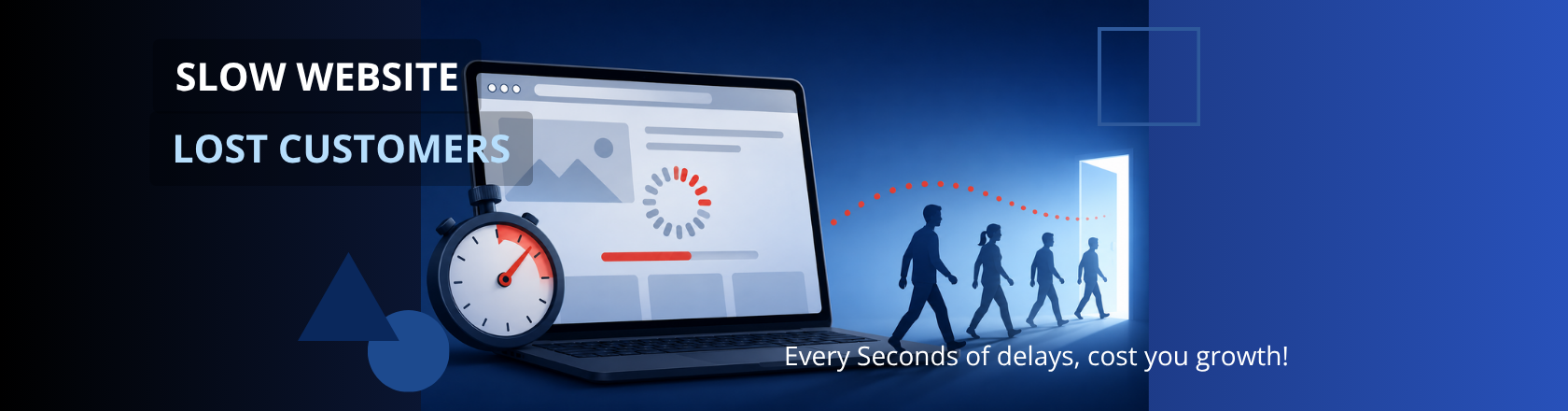
They leave before the page fully loads.
Not because your product is bad. Not because your pricing is wrong. Not because they aren't interested.
Simply because your website feels slow, unstable, or frustrating.
This is exactly what Core Web Vitals are designed to measure. And if you're a startup founder, they might be affecting your revenue more than you realize.
What Are Core Web Vitals?
Let's skip the technical jargon.
Core Web Vitals are Google's way of measuring whether your website feels fast and pleasant to use. Think of them as a website health check. Instead of looking at code, they focus on the experience real users have when visiting your website.
Google evaluates three things:
1. How Fast Does The Main Content Appear?
Imagine opening a restaurant menu online.
How long before you can actually read it?
Google calls this:
Largest Contentful Paint (LCP)
In simple terms:
How quickly does the important part of the page become visible?
Good: Under 2.5 seconds
Bad: More than 4 seconds
If your hero section, headline, or product image takes forever to appear, visitors start leaving.
2. Does The Page Suddenly Jump Around?
You've probably experienced this. You try clicking a button. A banner loads. The page shifts. You accidentally click something else.
Frustrating, right?
Google measures this using:
Cumulative Layout Shift (CLS)
In simple terms:
How stable is the page while loading?
Good websites feel solid.
Bad websites feel like the page is moving under your fingers.
3. How Quickly Does The Website Respond?
Imagine clicking:
- Buy Now
- Request Demo
- Get Started
And nothing happens. For a few seconds. Most users assume the website is broken.
Google measures responsiveness through:
Interaction to Next Paint (INP)
In simple terms:
How quickly does your website react when someone interacts with it?
Good websites feel instant. Bad websites feel laggy.
Why Founders Should Care
Because visitors don't care about Core Web Vitals.
They care about how your website feels. A slow website creates doubt. A jumpy website creates frustration. A laggy website destroys confidence. And confidence directly affects conversions.
The Silent Revenue Leak
Most founders obsess over:
- SEO | Ads | Social | media Content
Few look at website performance.
Yet imagine this:
You get 10,000 visitors per month. Your conversion rate is 2%. That's 200 conversions. Now suppose improving page speed increases conversion by just 10%. You now get 220 conversions.
Without spending a single extra rupee on marketing. That's the power of performance optimization.
Core Web Vitals And SEO
Google has publicly confirmed that page experience is part of its ranking considerations. But here's the important part.
Core Web Vitals aren't just about rankings. They're about user experience.
Even if Google completely ignored them tomorrow, they would still matter because users care. And users decide whether they buy.
Signs Your Website Has A Core Web Vitals Problem
Ask yourself:
Does your homepage feel slow on mobile?
Most startup founders test websites on their laptop. Most customers visit from their phone.
Big difference.
Do pages move while loading?
Look for:
- Shifting images
- Jumping buttons
- Moving content
Are visitors leaving quickly?
High bounce rates often indicate performance issues.
Are your paid campaigns converting poorly?
Traffic quality may not be the issue.
Website experience could be.
The Biggest Causes Of Poor Core Web Vitals
Oversized Images
One giant image can slow an entire page.
Too Many Third-Party Scripts
Chat widgets.
Analytics tools.
Heatmaps.
Tracking pixels.
Marketing plugins.
Many websites have dozens of scripts competing for attention.
Heavy Page Builders
Convenient for marketers.
Not always great for performance.
Unoptimized Videos
Large autoplay videos often hurt load speed.
Too Many Fonts
Every font variation adds weight.
What Founders Can Do Today
You don't need to become a developer.
Start with these actions.
Step 1: Test Your Website
Use:
- Google PageSpeed Insights
- Google Search Console
- Chrome Lighthouse
Look specifically at:
- LCP
- CLS
- INP
Step 2: Review Mobile Performance
If your website works perfectly on desktop but struggles on mobile, fix mobile first.
Step 3: Compress Images
Modern image formats like WebP can significantly reduce page size.
Step 4: Remove Unused Tools
Ask yourself:
Do we really need all these tracking scripts?
Many startups install tools and never use them.
Step 5: Prioritize Revenue Pages
Focus on:
- Homepage | Pricing page | Product pages | Demo page | Checkout flow
That's where performance improvements matter most.
What Good Looks Like
A visitor lands on your website.
The page appears quickly.
Nothing shifts unexpectedly.
Buttons respond instantly.
Navigation feels effortless.
The experience feels trustworthy.
That's what Core Web Vitals are really measuring.
Not code.
Not technology.
Trust.
How Digihealth Helps
At Markzentech, we often find that founders are investing heavily in marketing while unknowingly losing opportunities due to website performance issues.
Digihealth evaluates your website's digital health, including:
- Core Web Vitals
- Performance bottlenecks
- Mobile experience
- Conversion friction
- Analytics setup
- Trust signals
- Accessibility issues
More importantly, we translate technical findings into business impact.
Because founders don't need another performance report.
They need to know:
- What's hurting conversions?
- What's affecting growth?
- What should be fixed first?
Final Thoughts
Most startups don't have a traffic problem.
They have an experience problem.
Before spending more money on SEO, content, or paid advertising, ask yourself:
If 100 visitors arrived today, would your website deliver the experience they expect?
Because every second matters. Every click matters. And every visitor who leaves due to poor performance is a customer you already paid to acquire. A faster website doesn't just improve scores. It improves trust. And trust drives growth.
Senior Search Strategist · Published 10 June 2026
Kevin is a Senior Search Strategist, have transformed complex data and market trends into high-impact digital campaigns. He drive business growth through targeted search, competitor analysis, and advanced SEO/SEM execution.
Is your website losing customers?
Get a full digital health report: performance, SEO, trust signals, and conversion gaps, with plain-language fixes and revenue impact estimates.
Run a free scan